
Manta Ray Research Programme
The team at Jejak Kaki Konservasi are running a manta ray ID program in Raja Ampat, building up a database on these amazing creatures. Volunteers joining an expedition are highly likely to see manta rays while diving in the area. A common cleaning station for Manta Rays is a short boat trip away, dubbed “Manta Sandy” this is one of the observation sites for our monitoring program.
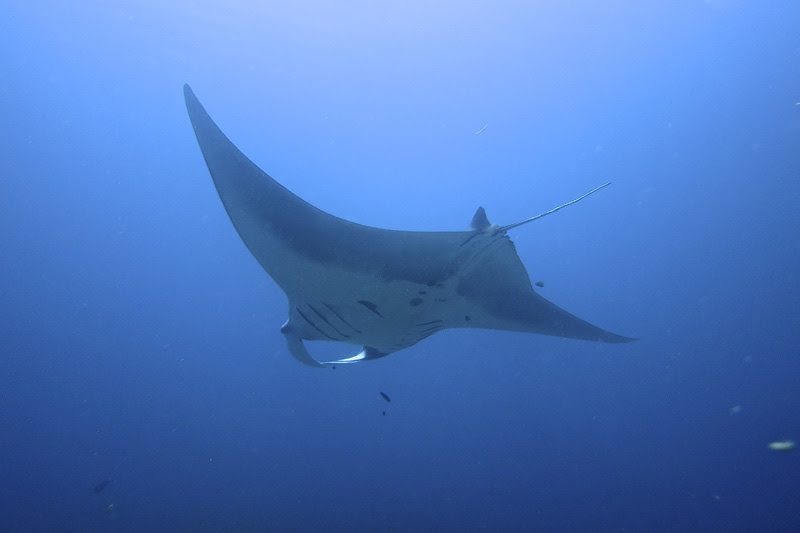
Volunteers wishing to participate in the program are trained by Jejak Kaki Konservasi Science Officers to recognize key characteristics, markings and behaviors of the gentle giants as well as their ecology, biology and conservation. Mantas are commonly sighted while out on other dives and have even been know to sneak up on unsuspecting project scientists! The manta in the picture below was estimated to have a wing span of 4 to 5 meters and kept volunteers and staff company on their safety stop on a Saturday fun dive at “Blue Magic” (not bad company!)
Mantas Rays, being the largest species of all Rays, are threatened with Extinction. With slow reproductive rates and large number of threats, including the Gill Raker Industry, Direct Fishing, Fishing Bycatch and Boat Strikes, their populations have plummeted over the last 15 years. This increasing threat represented in the up-listing of Manta Rays conservation status from ‘Near Threatened’ to ‘Vulnerable to Extinction’ by the IUCN and a proliferation of protection measures globally to ensure their long-term survival. It is essential that information is gathered on these spectacular creatures to support development of effective conservation measures. Expeditions such as these that gather information on Manta Rays, can help shed light on movement patterns of individuals and vital habitats that they use.
Since 2014 all of Indonesia’s territorial waters have essentially been designated as a protected area for Manta Rays, when national legislation was passed making it illegal to capture these beautiful creatures. This positive move by the Indonesian government has created the largest no take zone for Manta Rays in the world. Even earlier, since 2012 the 8 MPAs in Raja Ampat were designed as a special sanctuary for Rays and Sharks and the habitats they depend on, including the spectacular coral reefs found here. These coral reefs are fortunately still relatively untouched by coral bleaching, which has devastated much of the coral reefs around the world. Yet another sad knock on effect of humans impacts on our climate. Raja Ampats reefs seem to be particularly resilient to temperature changes which has buffered some of the effects. We hope to see this continue as the level of biodiversity and life these reefs hold is breathtaking. Because of these unique conditions volunteers have a good chance of seeing Manta Rays during their expedition and study the individuals they encounter. With both species of Manta Rays being present, the larger more secretive and much less observed Oceanic Manta Ray which can reach up to 7.5m width from wing tip to wing tip, to the smaller but no less spectacular Reef Manta Rays which can reach up to 5m.
All Manta Ray data collected by the marine biologists of Jejak Kaki Konservasi and the Barefoot Conservation volunteers is shared with the local Raja Ampat government departments (BLUD & Marine Fisheries), as well as other Manta Ray NGO's.
A Volunteers Week in Raja Ampat… “Mind Blowing” Just About Covers it…
Having recently graduated from University Bernie Burczak still has a fresh memory of lectures about tropical marine ecology always referring to the coral reef sanctuary that is Raja Ampat. It was not until she dived into the bright blue waters of Arborek Island house reef that she really understood the epic diversity of the underwater paradise slowly unfolding before her. With in a week she has already been lucky enough to encountered; Manta rays, Wobbegons, Black Tip Reef Sharks, Hawksbill Turtles, Bumphead Parrot Fish, Triggerfish, huge schools of Trevally, Nudibranchs, and Pygmy Seahorse’s to name just a few of the amazing creatures spotted.
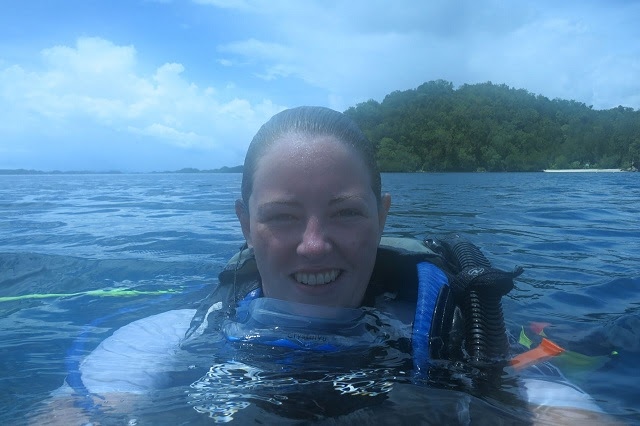
Bernie Diving in Raja Ampat
Here dive site names can be taken literally- “Blue Magic”, “Manta Sandy” and “Crazy Corner”(Cape Mansaur) are truly other world experiences and may cause serious over stimulation for any biologist or recreational diver alike, due to the extravaganza of life on every dive. Raja Ampat is truly a marine paradise not just for professionals but also for anyone who has the slightest interest in diving or coral reefs. Here, not only do you get the rare opportunity to see amazing creatures almost daily, but you are given the unique chance to understand what your looking at.
With the Science-Training Program (STP) given by the Science Officers of Jejak Kaki Konservasi you are able to learn about some of the animals your find whilst diving, and how they play a key role in the finely balanced ecosystem. Following on from this you are then able to participate in Reef Check surveys on the coral reefs on the surrounding islands with the Jejak Kaki Konservasi science officers. Giving volunteers making up the survey teams the chance to dive sites rarely if ever visited by your average tourist. This project will help local park managers target management strategies to conserve these precious reefs, allowing for future generation to see the beauty that we have been lucky enough to bare witness to.
“You know you’re in an amazing place when sharks are left off the list of cool things you saw on your dive because there were just so many”
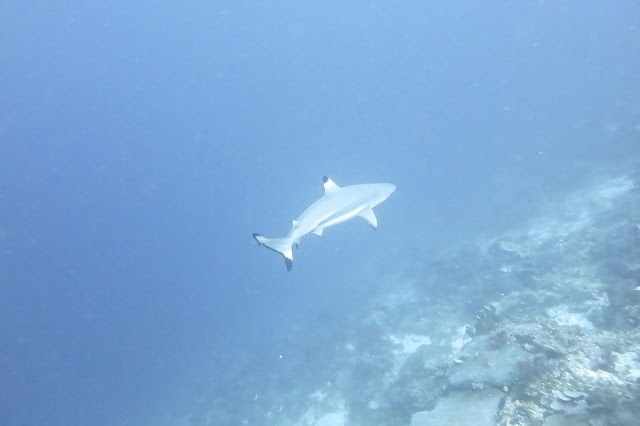
Black Tip Reef Shark - Raja Ampat
I knew I was in for a treat when I arrived at Arborek base camp because before I’d even gotten in the water I had seen dolphins and pilot whales on the boat trip to the island. As if this was not enough on arrival at base camp I saw a juvenile black tip reef shark feeding around the stilts of my new house- now a regular occurrence. Although all these animals were amazing the highlight of my out of water experiences has been seeing a Manta Ray breaching nearly a meter out of the water… all of this and I didn’t even need to put on a scuba tank!”


Science Training and Coral Reef Monitoring at Yayasan Jejak Kaki Konservasi
All science training is conducted by the Indonesian Science Officers of Yayasan Jejak Kaki Konservasi, who is our Indonesian project parter in Raja Ampat. A "Yayasan" is the word used for a charitable foundation, in Indonesian. And the words Jejak Kaki Konservasi, mean Foot Print Conservation.
The "Science Training Program" (STP) offers volunteers the opportunity to learn basic coral reef biology and ecology as well as identification of some of the amazing coral, invertebrate, fish and plant species that are commonly spotted throughout Raja Ampat and coral reef across the Indo- Pacific.
Whether you’re a budding marine biologist, avid diver or just someone who wants to try something new, the science program caters to all with an interest in marine ecosystems. Volunteers having participated in the science program often find that their whole diving experience is taken to another level of enjoyment owing to their new understanding and ability to identify what they are seeing.
The science program consists of a 1-2 week "Reef Check" course, covering a series of topics through classroom style lessons, where volunteers are given the tools they need to identify reef species. Following on from the “land lessons” are a number of in “water lessons”, where volunteers and trained members of Jejak Kaki Konservasi staff dive together, testing and refining their newly acquired identification skills, discussing any difficulties and celebrating successes following the dive.
Having completed the science training program, volunteers are able to join the Jejak Kaki Konservasi reef survey and monitoring teams, who conduct numerous research dives across many of Raja Ampats amazing coral reefs. This helps Jejak Kaki Konservasi to achieve one of their goals, which is to assist local government and communities to conserve and protect the coral reefs of Raja Ampat.
Jejak Kaki Konservai works in collaboration with NGO Reef Check Indonesia, and are the only Yayasan/Organisation performing these kind of Reef Check Surveys in Raja Ampat.


Barefoot Conservation Community Projects
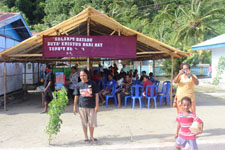 The community projects that you will be involved with have been designed by Barefoot Conservation, in conjunction with the local community and government. Through regular meetings between Barefoot Conservation and local stakeholders, including government, elders, women, school groups, fisherman, farmers, and many others, community projects are designed to meet urgent and long-term needs, while fulfilling the goals of the expedition, which include:
- Undertake educational programmes on environmental issues, sustainable fishing techniques and the economic benefits of marine protected areas.
- Increase quality of life and alleviate poverty in local communities.
- Encourage entrepreneurial attitudes to deter from unsustainable destructive activities like shark finning or dynamite fishing.
- Research the effects of Climate Change on coastal communities.
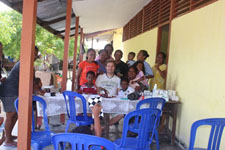 These projects are entirely funded by the fee that volunteers pay, and will cover a wide range of issues that the local community is facing. Some will be urgently needed and others may be more long term educational or quality of life issues. The progress of these projects will be monitored and evaluated over time to demonstrate how they contribute to the greater goals of both the local community and Barefoot Conservation. This will allow us to scale up projects that are having the biggest impact and to re-evaluate and redesign the less effective ones.
These projects will evolve over time as certain needs are met and others arise. As we grow as an organisation, we hope to expand our work from the island of Mansoear into neighbouring communities.
Volunteers could be involved with teaching English to the school children 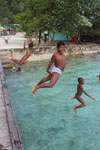 and other community members, river and beach clean ups, our renewable energy programme, climate change research, livelihood diversification workshops, our community medical clinic and providing education on environmental issues and eco-tourism to name but a few.
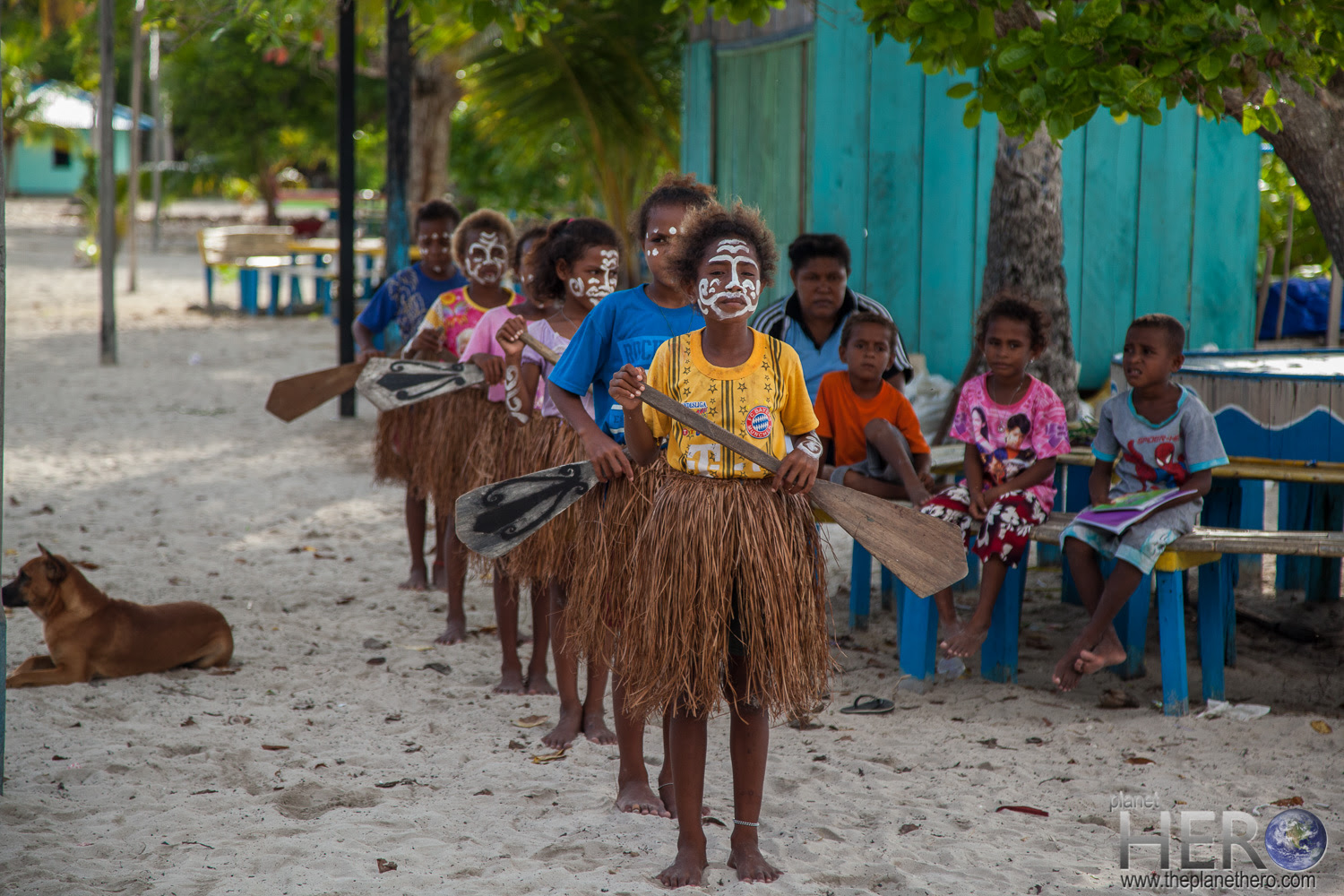
Village Kids
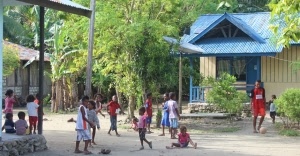
Village kids
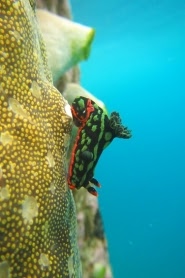
Arborek island has many different species of Nudibranch on its house reefs.
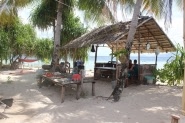
Relax with a nice cold beer in comfy beanbags or hammock, and watch the sunset.
More...

Crystal clear waters off the basecamp...These amazingly clear waters make visibility when diving perfect, allowing you to never miss a thing.
World News report on Raja Ampat "Underwater Eden"
RAJA AMPAT, Indonesia — Throughout time, explorers have combed the farthest reaches of the world for that one shot of discovering new life.
Dr. Mark Erdmann has taken that shot 89 times.
Since coming to Indonesia in 1992 as a young Ph.D. student from the University of California Berkeley, Dr. Erdmann has been deeply immersed in the exploration and conservation of the underwater worlds of Indonesia and South East Asia, helping to discover 89 species across the region.
His interest in Raja Ampat — an archipelago of over 1,500 small islands in Western Papua — started while living in a small fishing community in South Sulawesi, where his local fishermen neighbors regularly came back from fishing trips speaking of reefs teeming with fish and sharks.
Read the full article & interview with Dr. Mark Erdmann on the Worldnews.com website here..
Mattea Clarke
I actually did my first ever dive whilst on a coral reef conservation project, and I’ve been hooked ever since! Waking up every morning to go diving in crystal blue waters was just incredible. I made such fantastic friends with the other guys on the team!
Raja Ampat
Raja Ampat loosely translates to mean "Four Kings", and is an archipelago in the East of Indonesia made up of 1500 small islands and cays surrounding the main four islands (or Four Kings) of Misool, Salawati, Batanta and Waigeo. The Raja Ampat Regency covers over 40,000 Sq Km of land and sea, including the largest national marine reserve in Indonesia; "Cenderawasih Bay". The Regency is part of the new West Papua province which was formerly know as Irian Jaya. The capital of the regency is Waisai (est. population 6000) which is located on Waigeo and is only a 45 minute boat ride from our island/project site.
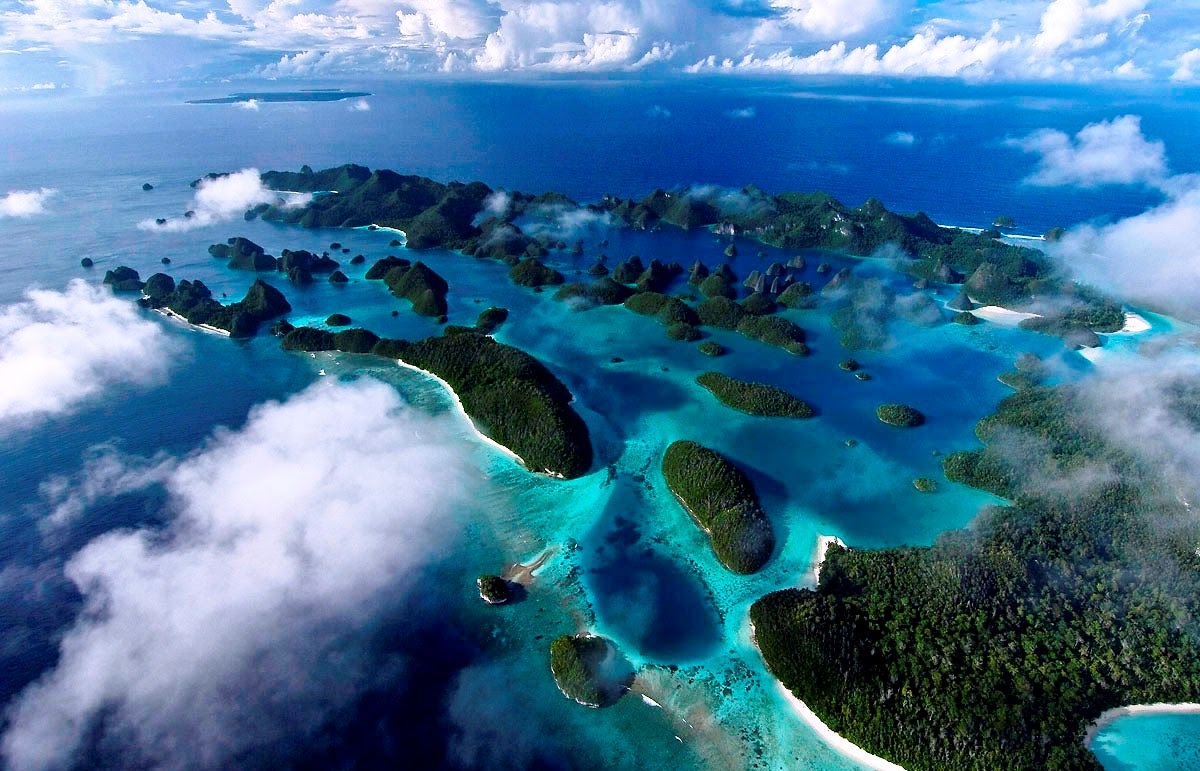
Raja Ampat sits right in the heart of the "Coral Triangle", which is unquestionably the most bio-diverse area for marine life in the world.
Incredibly, the oceans that surround Raja Ampat contain 80% of all the world's coral species (10 times the number of species found in the entire Caribbean!), 1350 species of fish, 6 of the world's 7 marine turtle species and 27 varieties of marine mammal.
With so many of the 1500 small islands, cays and reefs still to be mapped and discovered, Raja Ampat truly is one of the "worlds" final diving frontiers!

Project Summary & Goals
Summary:
Barefoot Conservation is working in partnership with the Raja Ampat local government, local Papuan Communities and stakeholders, to protect the coral reefs of Raja Ampat and the communities that rely on them.
This partnership is bonded by a willingness to make a real difference, and the understanding that research, survey dives and Marine Protected Areas cannot work unless accompanied by education and the sustained alleviation of poverty.
The Raja Ampat project is designed to work at a grass roots level, thus making a real difference to real people, and a difference that each volunteer can see and be a part of.
Goals:
- To conduct marine underwater surveys using the Reef Check methodology, collecting data, for the use in advising local government, local communities and other NGO partners, on the health of coral reefs and the marine life in Raja Ampats Marine Protected Areas (MPA's).
- Produce a local Manta Ray Identification (ID) database, through underwater manta ray surveys. Sharing collected data with local government and NGO partners.
- Monitor the number of Crown of Thorns Starfish (COT's) in the region, undertaking COTs survey/removal dives during large outbreaks.
- Undertake educational programmes on environmental issues, sustainable fishing techniques (if necessary) and the economic benefits of MPA's.
- Increase quality of life and alleviate poverty in local communities, through our community projects - Education, Waste Management, Health Clinics, Family Planning, Dental Hygiene and Renewable Energy.
- Encourage entrepreneurial attitudes to deter from unsustainable destructive activities like shark finning or dynamite fishing.
Insurance
You will need both scuba diving and travel insurance that covers you for the duration of your expedition and for scuba diving up to 30 meters. IF YOU DO NOT HAVE ADEQUATE SCUBA DIVING INSURANCE YOU WILL NOT BE ALLOWED ON THE EXPEDITION. You must send us copies of your insurance certificates and policies before you join the expedition.
We strongly recommend you use Divers Alert Network (DAN) for your insurance as they are by far the best and most reasonably priced. Please visit www.diversalertnetwork.org for further details.
Visas, Passport & Vaccinations
Most nationalities will need a Visa when entering Indonesia. Please note in most cases a Visa On Arrival (VOA) can be obtained at the airport for US$35 (approximately £21, $37 AUD) or can be purchased before departure. The VOA is for a total duration of 30 days only and can only be extended once in country, for another 30 days (approximate cost £35, US$58 or AUD$62). If you are joining an expedition for more than 8 weeks we recommend you purchase a 60 day social visa from the Indonesian embassy in your country before joining the expedition. Please contact one of our helpful trip advisers before applying for this visa, as we can provide you with all necessary forms, documents and information to process the application.
You can now also apply for a eVOA online before arrival, via this official Indonesian immigration website: https://molina.imigrasi.go.id/
You MUST have 6 months validity left on your passport when entering Indonesia.
For vaccinations it is important that you consult with your local physician 4-8 weeks before joining the expedition. This is so you can get up-to-date information on vaccinations and general health concerns when travelling to East Indonesia.
While the site does not generally have a major issue with mosquito's (due to the beach front location and cool breeze), we still recommend you take precautions against Malaria. However we do not recommend you take Lariam (mefloquine) tablets as these can have side effects that could be mistaken for Decompression Sickness.
Please remember you are travelling to a remote tropical island in a remote part of the world. As Indonesia is a tropical country the risk of tropical virus's is higher, than in other countries.
In all cases please consult your local physician for up-to-date medication advice.
Getting There
The main airport used to get to Raja Ampat is "Sorong" on the western tip of Papua, this area is extremely safe, is very well built up and set up for tourism. The best way to get to Sorong is:-
"Jakarta to Sorong to Raja Ampat"
You can fly from Jakarta, the capital of Indonesia to Sorong . As all internal flight to Sorong leave early morning we recommend you look for flights that arrive in Jakarta around late evening (7pm) the day before your expedition start date. This way you will spend less time in transit at Jakarta airport. Operators that fly to Sorong from Jakarta are: AirAsia, Lion Air, Batik Air, Sriwijaya and Garuda Air. (all have stopovers in either Makassar, Ambon or Manado, accept AirAsia and Batik Air which are the only airlines to currently fly direct). We recommend using the flight booking site Skyscanner, and highly recommend arriving the day before your expedition start date if possible.
The meeting point on your expedition start date is the Fave hotel which is very close to the airport (5 minute taxi ride) where you can relax in the hotel lobby or restaurant while you wait for the 9am ferry to depart for Waisai the capital of Raja Ampat. A Barefoot representative will collect you from the Fave Hotel at 08:00 to take you to the ferry port, where your catch the ferry (approx 2 hours) to Waisai. Our boat will meet you on arrival in Waisai and take you on the final 90 minute boat ride to your home for the duration of your expedition. NOTE: If you are already travelling in Indonesia before your expedition or travelling in Singapore please contact us for alternative ways to get to Sorong if you do not wish to fly from Jakarta.
“Raja Ampat to Sorong to Jakarta”
On the day of your departure from the expedition, our boat will depart basecamp at 07:15 to take you back to Waisai, where the ferry to Sorong leaves at 9am. You will arrive in Sorong approx 2.5 hours later, around 11:30am, and may need to stay one night in a hotel in Sorong as there are limited flights departing Sorong airport in the afternoon. Most flights from Sorong to Jakarta leave in the morning/early afternoon and arrive in Jakarta late morning/midday. From here you can transfer from the domestic terminal to the international terminal to wait for your connecting international flight home.
**Barefoot Conservation can help advise you on domestic flights to/from Sorong**
Barefoot Conservation can also advise you on international flight bookings, so please do not hesitate to contact us when booking flights.
Expedition Staff
Our expedition staff are made up of both overseas volunteers and paid local community members. The staff are there for your health & safety and to help guide you in getting the best possible experience from your time with us. At Barefoot Conservation we feel it is very important we all work together as a team to achieve our goals, and that mutual respect is shown to each other at all time. No matter what your age or experience in life, everyone's opinions are valid and listened to by our dedicated staff members, so please never feel afraid to discuss any issues/concerns or opinions with our expedition staff.
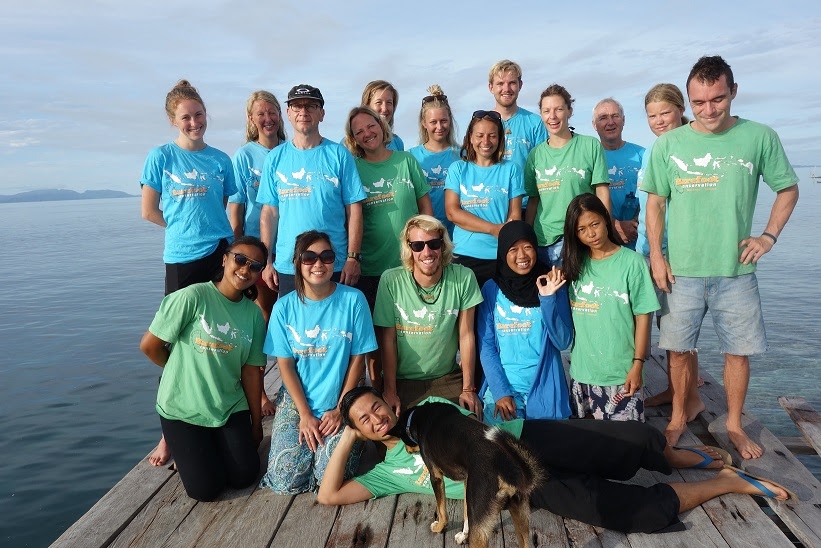
Expedition Staff :
- Project Site Manager/Expedition Leader (PSM/EL)In charge of managing all on site personnel and holds overall responsibility for managing the expedition, including the smooth running of the day-to-day activities and ensuring key targets/goals are met.
- Project Scientist (PS)Responsible for designing, planning and co-ordinating the science programmes. Communicating all science related data to local government, project partners and local community. In charge of all SO's and deputises for the EL when needed.
- Scuba Instructor (SI)Responsible for teaching all PADI Scuba courses to volunteers and staff. Planning, organising and overseeing all day-to-day diving activates, including all diving related health & safety.
- Medical Officer (MO)Has the overall responsibility of providing medical support to all on-site personnel. Maintaining all medical equipment and supplies. Please note it is not always possible to have a MO on site, however during this time there is a local nurse on the island, we have doctors available to call, and the local hospital is 45 minutes away by fast speed boat. When possible we always try to have a MO on site, but there may be times when a MO is not on the project.
- Science Officer (SO)Works under the supervision of the PS and has the responsibility of running the science programme on a day-to-day basis, including presentations and in-water spot dives. Ensures all survey dives are well planned, run smoothly and that all the daily data is collated correctly.
- Community Officer (CO)Liaises between the expedition team and the local community. Responsible for co-ordinating the days community projects for volunteers and reports directly to the Country Manager and EL.
- Boat Captain (BC)Responsible for driving the boat safely to/from survey dive sites. Maintains and services the boat/engine, and oversees all personnel safety while on the boat.
- Dive Guide (DG)Works with the BC and SO to determine which survey sites to visit that day. Provides guidance and advice on the boat and is responsible (along with the BC) for the survey teams safety.
- Master Chef (MC)Responsible for providing amazing meals every day (except Sundays), which keep the expedition team going and full of energy.
Accommodation & Food
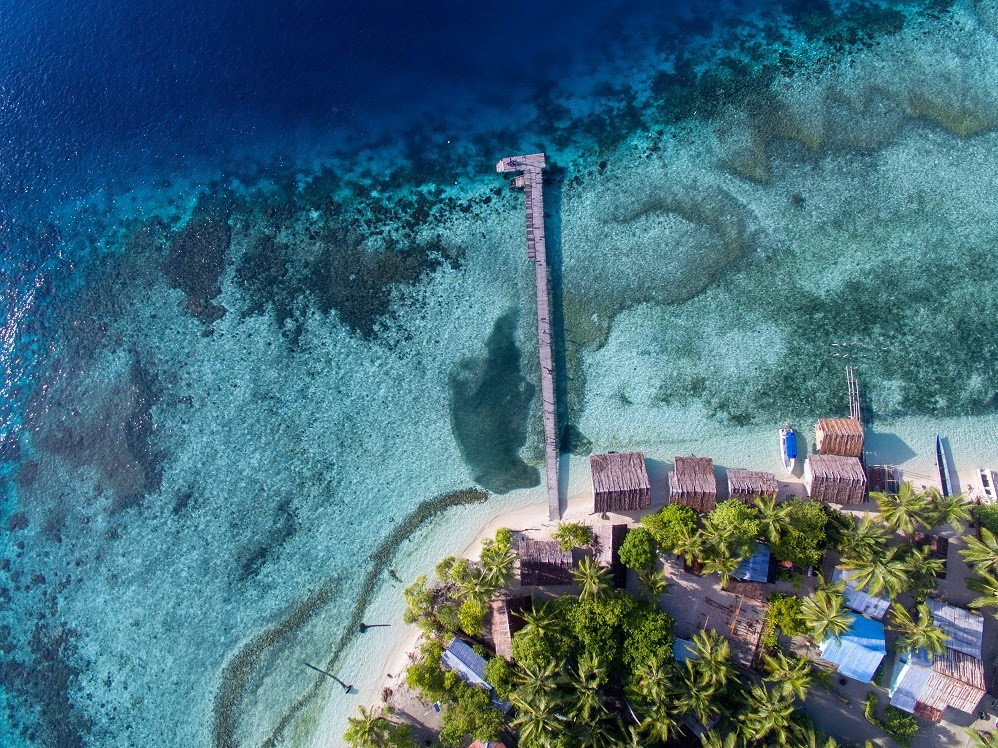
Accommodation is provided on our amazing beach-front location on Arborek Island, just meters from the calm, crystal clear ocean and comprises basic dormitory style beach bungalows, and two private beach bungalows (extra rental cost applies).
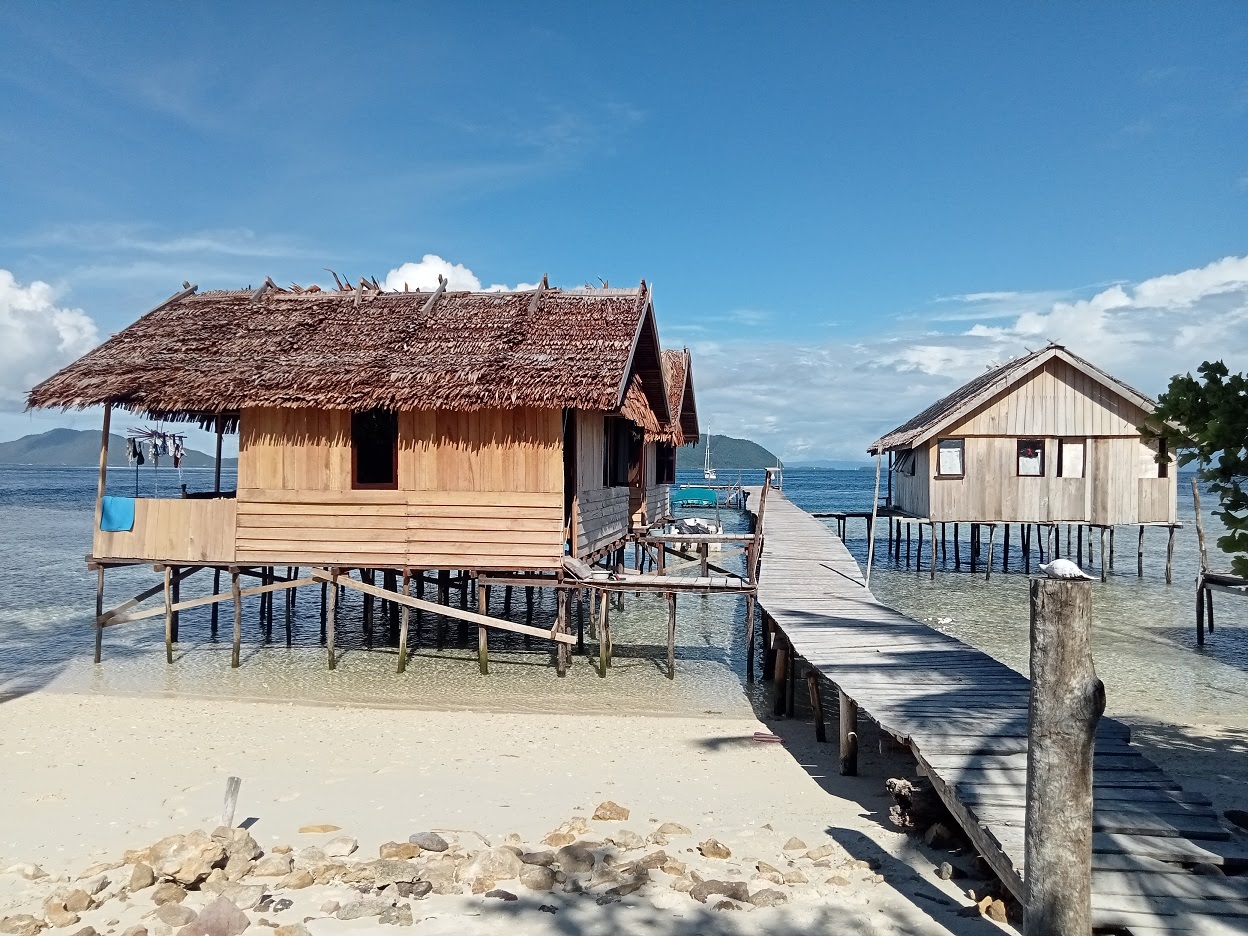
Each bungalow has been hand built by the local community using traditional methods and materials. You will be provided with a bunk bed, mattress, pillow, basic linen (you may wish to bring a light sleeping bag) and mosquito net, along with a fan for each room. The bungalows are same gender and have power supply so you can recharge cameras, tablets and phones.
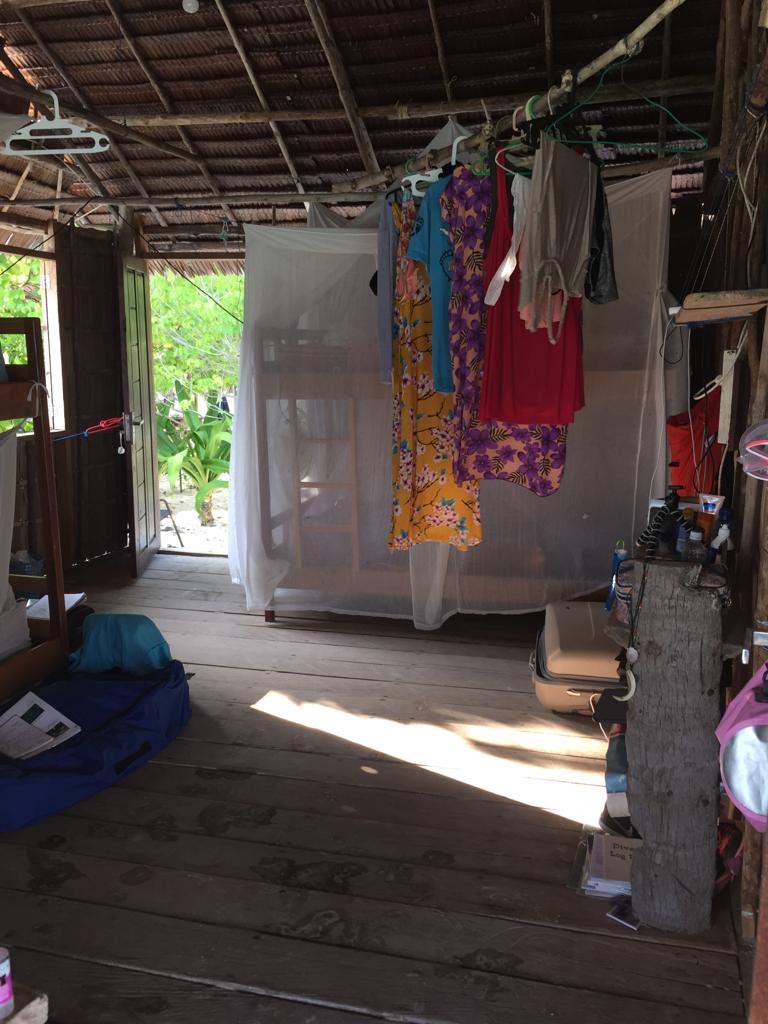
**Please note accommodation is in basic shared beach bungalows, and is not of a 5 star luxury resort!**
The project site has western style toilets and limited fresh water to shower/wash in. While the island does have water wells, these are now getting increasing salty, so currently our fresh water comes from our desalination machine or from Waisai each Wednesday, while we find a solution to the communities/islands fresh water supply issue. Due to this and because we are a conservation project on a tropical island so we may at times limit the amount of shower time.
We provide 3 meals a day (specific dietary needs can catered for). These meals are at fixed times during the day, so that the day's dive surveying and community projects can be effectively managed. Meals are based upon local cuisine and seasonal availability of locally produced food. Meals are prepared and cooked by local staff, except on Sundays when expedition staff & volunteers will prepare and cook all meals.
While we will endeavor to provide a balanced diet of fresh fruit and vegetables during your expedition, you may wish to consider bringing a supply of vitamin supplements.
Volunteers with specific dietary requirements will be catered for, please indicate these requirements on your booking form.
Communications
At present only one local network provider (Telkomsel) has coverage/reception in the Raja Ampat region. If you really do want to stay in touch with the outside world, it is possible to purchase a Telkomsel SIM card (Jakarta Airport or Sorong city) and use it in your mobile phone while on site *YOU MUST REGISTER YOUR PHONE ON ARRIVAL AT JAKARTA AIRPORT*. The basecamp on Arborek has pretty good reception now as a new mobile tower was recently built on the island. Some overseas mobile phones may work if set to roaming but please check with your network service provider before joining the expedition. Calls/texts may well be cheaper from a local SIM card.
Smartphones can receive 3G/4G for use with internet, and our staff can help you purchase phone credit and data packages.
No mobile phones are permitted during Scuba/Science lectures or while attending any community projects.
Day-to-Day Expedition Life
Your typical day will consist of 2 survey dives and time spent on various community projects in the local community. At Barefoot Conservation we believe it is vital to work in the community, educating, improving equality of life and alleviating poverty, alongside producing a detailed habit map of the surrounding coral reef/marine life that the community rely so heavily on.
Breakfast will be served at 7am and depending on the weather, and advice from our local dive guides/boat crew, you will either start your first survey dive of the day at 9am or visit the local community to assist on various community projects which the Community Officer will organise.
At the end of each survey dive you will relay the data from your dive slates on to the data recording sheets, for later entry into our database.
After lunch (12:00-12:30) you will do the opposite of what you did in the morning, so if you worked on community projects in the morning, your undertake survey dives in the afternoon and vice versa.
Dinner is served at 19:00 and, after a short de-brief session on the days activities, the evening is yours to relax, have a cold beer and talk about the amazing marine life you saw or the kind villagers you made friends with, while watching the sunset off Barefoot jetty.
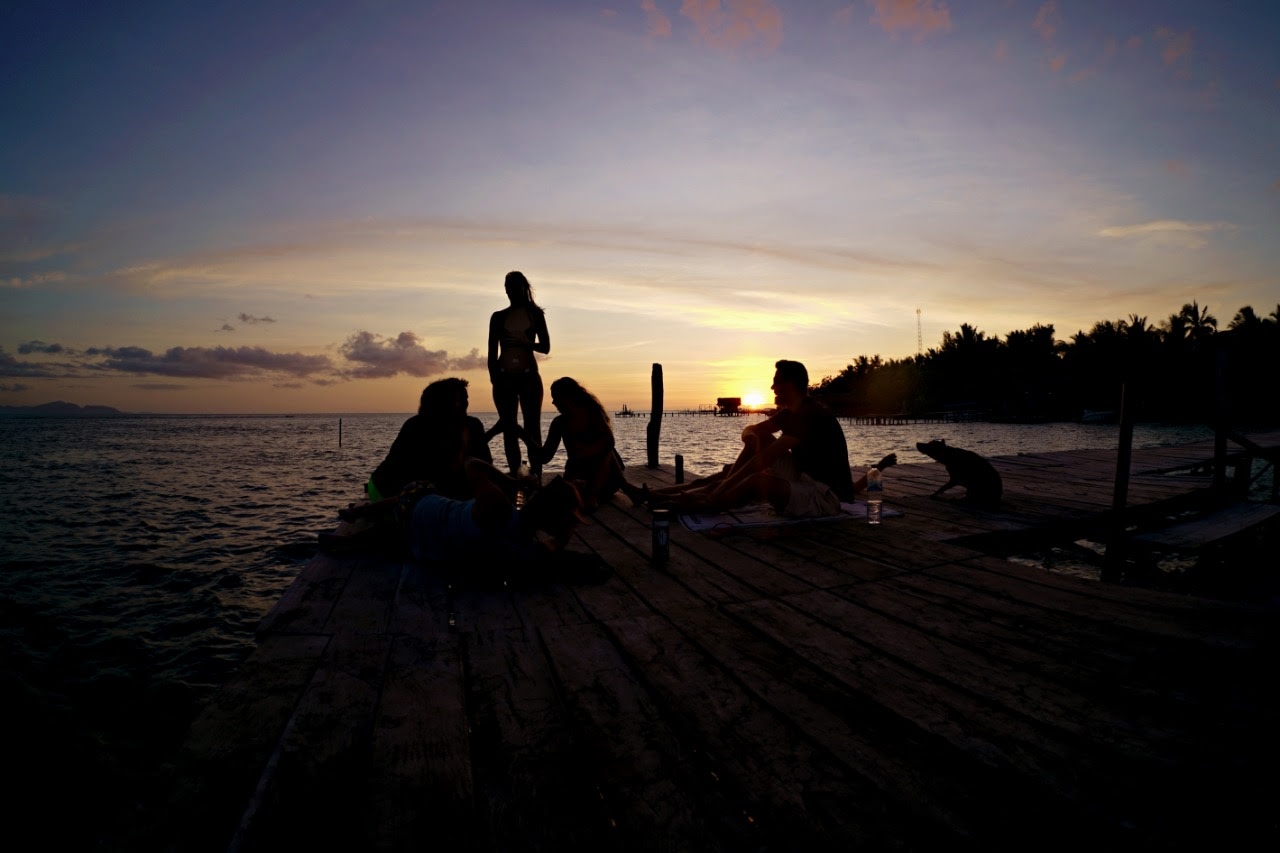
Some evenings may involve an advanced presentation or Indonesian language lessons for those interested and theory sessions for volunteers taking extra PADI scuba courses.
Monday to Friday are reserved for survey dives and Community project work.
Saturday is for fun dives where the Barefoot dive profiles are relaxed slightly, and dive computers can be used for multi-level divers, that are deeper and longer.
Wednesday mornings the team goes to Waisai the capital of Raja Ampat to collect/drop off volunteers and pick up supplies. Volunteers can join this trip to use the internet and buy any extra luxury items in Waisai. Please be aware that the capital only has a population of 6000 and hence is still small, so it does not have hundreds of shops.
Sunday is a complete NO dive day, this is for health & safety reasons and gives your body time to recover from the weeks diving. This gives you some valuable downtime when you can sunbath, play volleyball or football, go for a swim/snorkel, read a book, go for a walk around the island, watch a movie or visit the local village.
Saturdays & Sundays may be used by the SI when teaching extra PADI Scuba courses, however only confined diving (no deeper than 5 meters) can be undertaken on the Sunday.
NOTE* The above typical day is open to flexibility; the day may not always be as above due to logistical reasons or situations out of our control (bad weather, public holidays, local community ceremonies etc..). The morning survey dives may be at a far away dive site and thus breakfast may be served earlier. Or the local village may be off limits for the day due to private religious ceremonies. When ever possible Barefoot will try to stick to the typical day plan, however a certain amount of flexibility and understanding is needed from all expedition personnel.
Scuba Diving
Unqualified Scuba Divers:
If you join an expedition as an unqualified diver you will take part in the Dive Training Program (DTP) and be a Dive Trainee (DT). This will take part during the first week of the expedition and will involve being trained first as a PADI Open water (OW) diver, and then as a PADI Advanced Open Water (AOW) diver. Our fully qualified PADI Scuba Instructor will guide you through the dive theory, then confined water sessions (no deeper than 5 meters), and then, once you are comfortable, on to the open water sessions where your dive to no deeper than 18 meters.
The AOW course does not involve as much theory work as the OW course, and is more about reinforcing what you have already learnt, by undertaking 5 dives. A "Deep" dive (max 30 meters) and a "Navigational" dive are mandatory as part of the PADI AOW course, however, as you will be doing coral reef surveys, it is vital your buoyancy is good and hence we also make the "Peak Performance Buoyancy" dive mandatory as well.
For your safety, and that of the other divers on the survey team, DT's will not be allowed to take part in survey dives until they have passed the OW and AOW courses to the satisfaction of the PADI Scuba Instructor teaching them.
NOTE* Volunteers joining as a Dive Trainee will have to provide their own PADI OW and AOW eLearning (online manuals) for each course undertaken. PADI have now made it mandatory for each student to have there own set of manuals/eLearning for each course. We can help you purchase the eLearning (comes with PADI certification) for your courses.
NOTE* During peak volunteer times DT's may need to share these BCD's, Regulators and some other rental equipment with other volunteers.
Qualified Scuba Divers:
If you are joining an expedition as a PADI AOW qualified scuba diver, or equivalent level with another organisation (see comparison table), your expedition will start a week later than the Dive Trainees taking part in the DTP. It is important that you send our UK office (via email) a copy of your scuba diving qualification card and log book detailing when your last scuba dive was before your expedition start date. You must also take this qualification card and log book to the expedition with you for the on-site PADI Scuba Instructor to verify.
For your safety and that of your fellow divers, all qualified divers joining an expedition must undertake a review dive with the PADI Scuba Instructor to demonstrate their dive skills, show they have the necessary neutral buoyancy skills to undertake survey dives and prove they do not pose a safety risk to themselves and/or others.
Qualified divers will not be allowed to take part in survey dives until they have passed this scuba review dive to the satisfaction of the on-site PADI Scuba Instructor.
NOTE* You will not be allowed to take part in survey dives until you have passed this scuba review dive to the satisfaction on the PADI Scuba Instructor.
NOTE* All qualified scuba divers joining an expedition must provide all their own diving equipment (BCD, Regulator, Dive Computer, Mask, Fins, Wetsuit, Booties, Delayed SMB, Reef hook etc..). Most of these items can also be rented from Barefoot Conservation. Please see our "costs & dates" for more details and for the rental costs.
All volunteers:
As Barefoot Conservation's priority is your safety at all times we maintain a high level of diving standards and strict dive profiles. The Barefoot Conservation dive profiles are more conservative than the recreational dive tables other scuba diving centers may use.
This is due to the amount of diving volunteers will be undertaking each week and to greatly reduce the risk of a diving incident.
It is the responsibility of the volunteer to present themselves fit for diving (i.e. well rested, well hydrated with no pre-existing injuries or illnesses). If volunteers have any doubt as to their fitness to dive they must refer themselves to the Medical Officer (MO), when one is available.
If volunteers are proven to have misled Barefoot Conservation, or its appointed MO regarding medical issues, they will not be allowed to dive until cleared to by Barefoot Conservation head office and on-site MO. If an individual has willfully misled any of the above they may be dismissed from the project.
The MO’s decision on an individual’s medical suitability to dive is final once confirmation from Barefoot Conservation head office is obtained.
Cave diving, cavern diving, wreck penetration or any other form of diving presenting a ‘no clear surface’ environment is not permitted at any time.
*IMPORTANT*
All volunteers MUST read the Barefoot Conservation "Dive Profiles and Standards" document before joining an expedition.
Community Projects
The community projects that you will be involved with have been designed by Barefoot Conservation's "Community Team", in conjunction with the local community and government. Through regular meetings with the local community, local government and the Community Team, community projects are created which are designed to meet urgent needs and the goals of the expedition mentioned under the "Project Summary & Goals" section of this guide.
These projects will cover a wide range of issues the local community are facing. Some will be urgently needed and others may be more long term educational or quality of life issues.
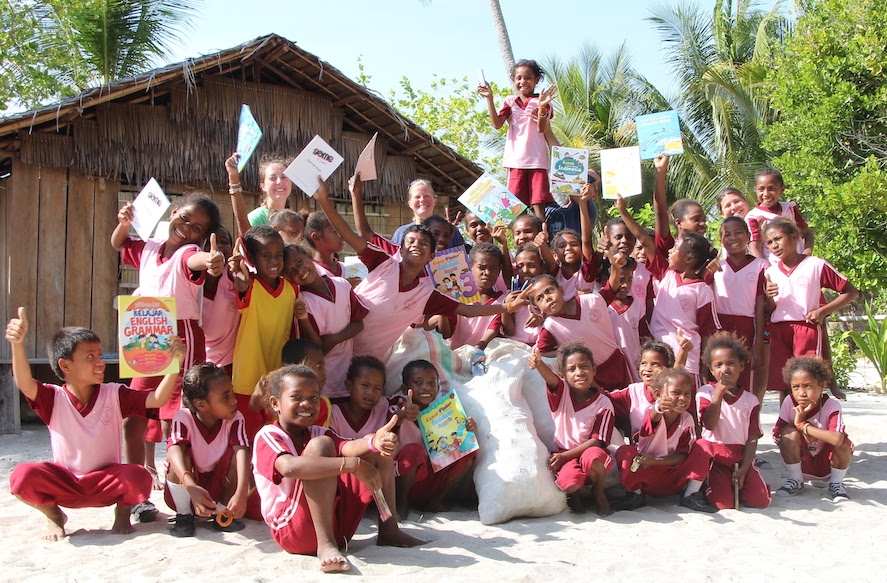
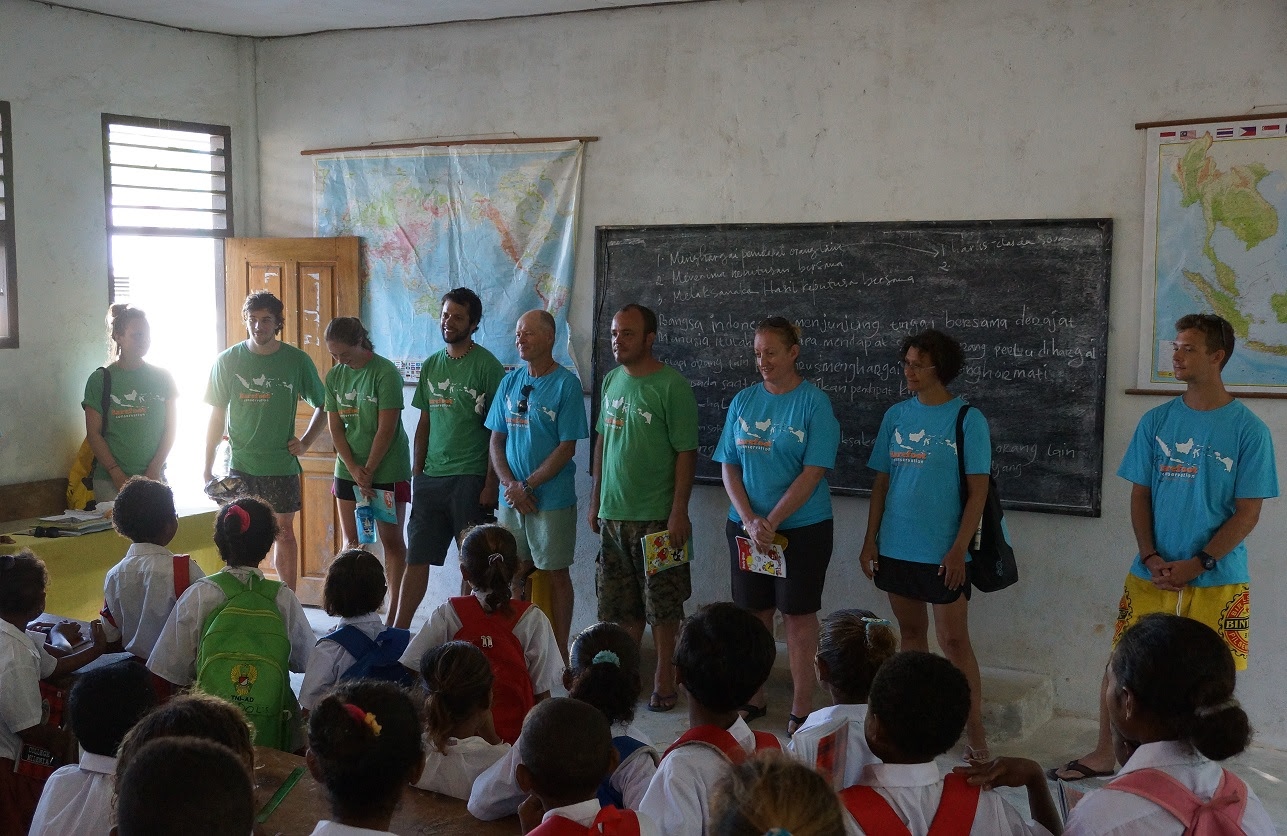
Volunteers could be involved with teaching English to the school children and other community members, beach clean ups, our renewable energy programme, climate change research, our community medical clinic, kids dental hygiene and providing education on environmental issues and eco-tourism to name but a few.
Social Life
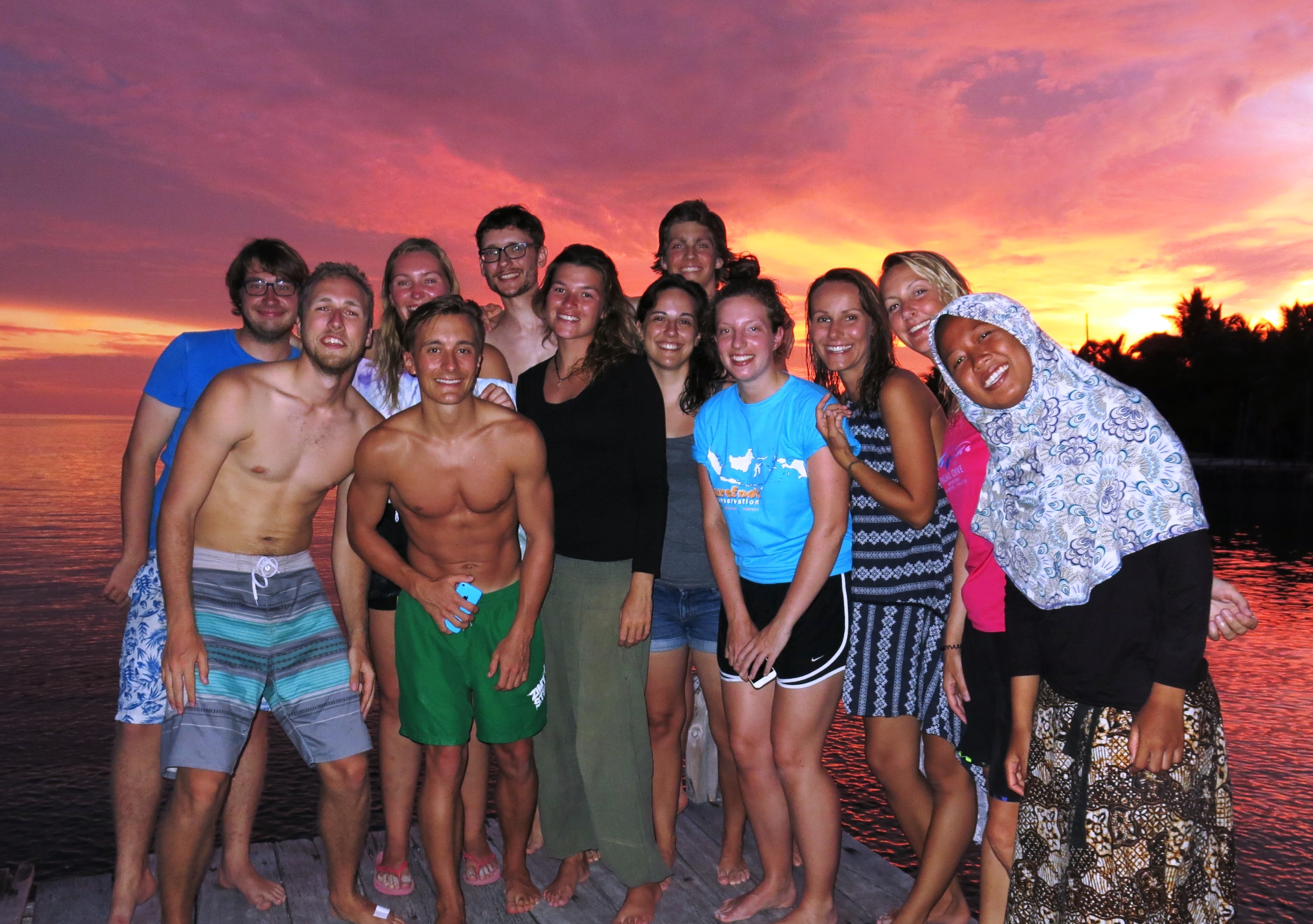
Barefoot Conservation is run and owned by ex-expedition volunteers so we understand that volunteering for an expedition is not just about the amazing survey dives and making a real difference in the local community, its also about the friends you make, who, more often than not, become friends for life.
That is why we encourage a good social life while on expeditions; fancy dress parties, murder mystery nights, social events, evening games, movie nights, volley ball competitions and a few cold beers on a Saturday night are all part of that.
Local Cultures & Customs
Barefoot Conservation relies heavily on the relationship between us, the local community and the government of the host country our projects are based in. We are merely guests in their county and, as such, all expedition volunteers and staff must act accordingly. When you join a Barefoot expedition you become part of the larger Barefoot community. You are the face of Barefoot Conservation and hence you must be aware of and respect all local cultures and customs.
All expedition volunteers/staff are briefed by the EL & CM on arrival, regarding the local cultures and customs you need to be aware of and respect while on the expedition. We also recommend you brush up on Indonesian/West Papua local cultures and customs before your expedition. Specific country travel guides or internet searches are a good way to do this.
Equipment
Diving Equipment:
All volunteers joining our expedition as a non-diver or a qualified diver, must bring the follow diving equipment: BCD, Regulator set, mask, wetsuit, fins, dive boots, and a dive computer. Dont worry if you do not have these items or you do not wish to carry them around, while on further travels, as it is possible to rent these items from us. Please see our "costs & dates" page for further details, or contact one of our operations team. *NOTE during busy periods equipment may need to be shared between volunteers/staff.
All volunteers will be provided with tank, weights and weight belt as part of your expedition fee. Other items that volunteers need to bring are a dive slate, torch and reef hook. Please check the equipment list sent to you in your welcome email, for a full list of what to bring.
Personal Expenditure
Over the course of a Barefoot Conservation expedition volunteers will require funds for in-transit expenses and personal expenditure, such as bar refreshments, luxury items from the capital etc. A budget of approx. £185 to cover in-transit expenses to/from the expedition base, and a budget of approx £150 per month for personal expenditure during the course of your expedition is usually adequate. A rough guide to help you plan personal expenditure whilst in-transit to/from the expedition and during the course of their expedition is given below:
The exchange rate for the Indonesian Rupiah (IDR) fluctuates so please check current rates before leaving.
Outgoing Journey Personal Expenditure
- Visa on Arrival - $35 US dollar and $35 for a 30 day extension if needed.
- Any Excess Baggage - 24,500 IDR (approximate)per kilo over the Maximum 20 kilo allowance (20kg for Lion Air, 10kg for Wings Air)
- Taxi Sorong Airport to Hotel - 50,000 to 100,000 IDR
- Taxi Fave Hotel to Ferry port Sorong - Free (included in Expedition Fee if arriving on designated expedition start dates)
- Accommodation Sorong - 500,000 IDR (250,000 IDR each if sharing twin room) (Breakfast included)
- Evening meal - 50,000-100,000 IDR
-
Ferry Sorong to Waisai (Raja Ampat capital) - 150,000 IDR
-
Raja Ampat Marine Park Fee - 1,000,000 IDR
On-site Personal Expenditure
- Personal expenses per month (bar refreshments, luxury items etc..) - 2,000,000 IDR - 3,000,000 IDR
- Visa extensions if needed - 500,000 IDR (per 1 month extension for VOA), 500,000 IDR (for Social visa extensions).
- Extra optional PADI dive courses - Rescue Course £220 - Divemaster course £370
- Any ad-hoc scuba equipment rental not pre-arrange - See "Costs & Dates" for prices
Return Journey Personal Expenditure
- Ferry Waisai to Sorong - 150,000 IDR
- Taxi from port to hotel - 100,000 IDR (can be split between several volunteers)
- Accommodation Sorong- 500,000 IDR (250,000 IDR each if sharing twin room) (Breakfast included)
- Meals - 50,000 - 100,000 IDR
- Taxi hotel to Sorong aiport - 100,000 IDR (can be split between several volunteers)
- Excess Baggage - 24,500 IDR per kilo over the Maximum 20 kilo allowance (15kg for Lion Air, 10kg for Wings Air)
We recommend you bring the majority of your money in Indonesian Rupiah with some US$ Dollars as a backup for emergencies (approx US$100). The best chance to get any money out from an ATM is in Sorong. Waisai does now have some ATM's, however not all international bank cards work. Travelers cheques are not recommended.
Important - While there are new ATM machines in Waisai (where we go every Wednesday for supplies), some foreign ATM cards do not work with them. This means there may not be another opportunity to make further currency exchanges or ATM withdrawals until you return to Sorong at the end of your expedition.
Volunteers should therefore consider carefully how much foreign currency they plan to carry as cash for the duration of their expedition.
Barefoot Conservation also recommends that volunteers bring a credit card for emergency use as many insurance companies will not pay for bills upfront and so initial payments may be needed.